

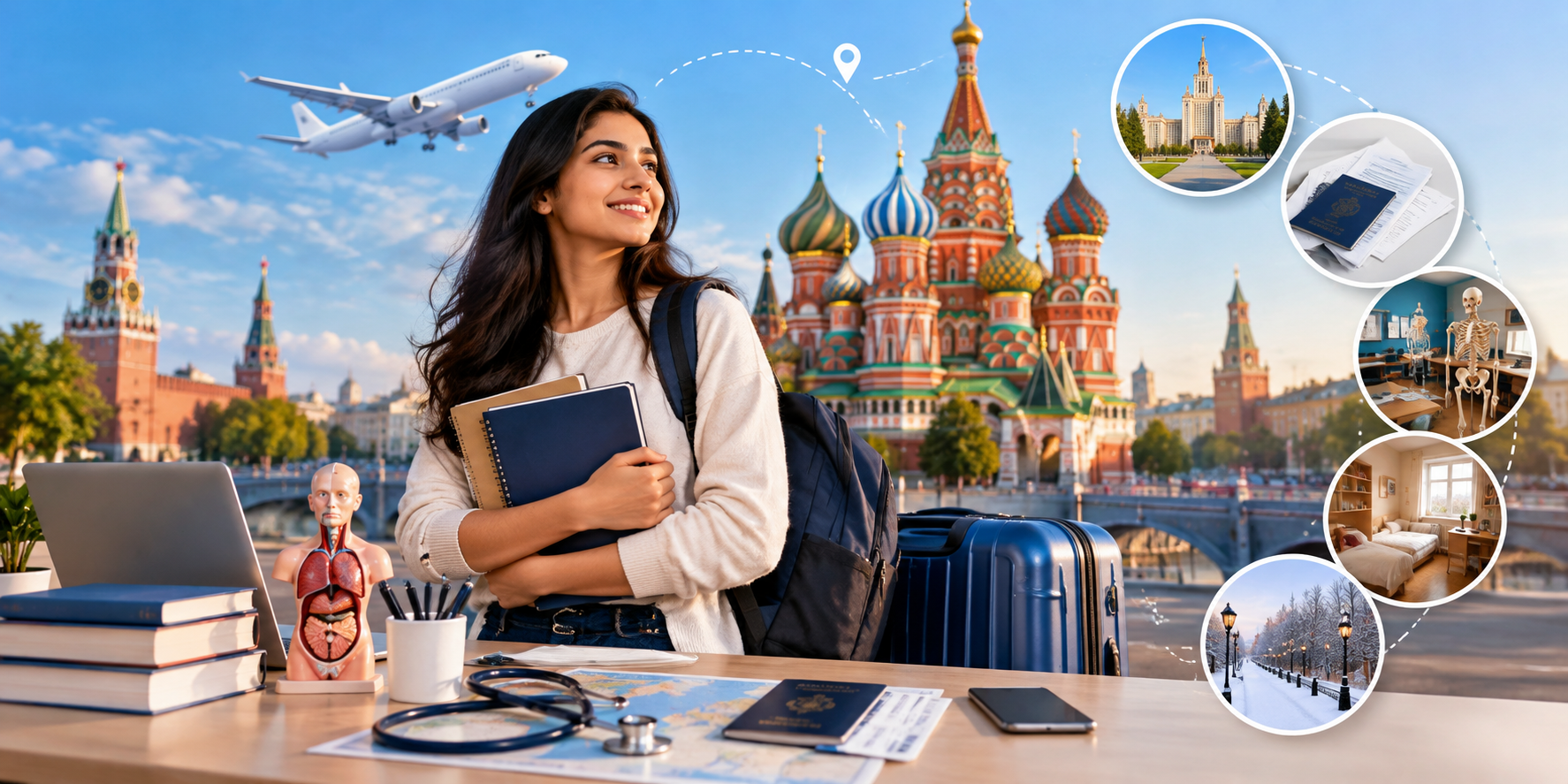
Starting your medical education in another country is an exciting step, especially if it is your first time living away from home. For Indian students, moving to Russia means adjusting to a new education system, different weather conditions, a new culture, and greater personal responsibility.
The first year of medical school is an opportunity to build strong study habits, make new friends, and become comfortable with university life. Preparing in advance can make this transition easier and help you focus on your studies instead of worrying about everyday arrangements.
If you are planning to pursue medical education abroad, here is how to prepare for your first year, from arranging documents to managing your budget and understanding university requirements.
1. Understand Your University and Course Structure
Before travelling, learn about your university, its academic calendar, and the subjects included in the first year. Medical programmes can differ between institutions, so it is important to check the official curriculum rather than relying entirely on information from other students.
Depending on your university, the first year may include subjects such as anatomy, biology, chemistry, and introductory medical sciences. You should also understand the attendance requirements, examination pattern, practical sessions, and assessment methods.
If you want to study MBBS in Russia, compare universities carefully and confirm the course structure, medium of instruction, accommodation arrangements, and applicable eligibility requirements before making your decision.
Having this information in advance will help you set realistic expectations and prepare for the academic year.
2. Keep Your Admission and Travel Documents Ready
Documentation is an important part of preparing for your journey. Missing or incorrect documents can cause unnecessary delays during travel, admission, or university registration.
Prepare a checklist based on the latest instructions provided by your university and the relevant authorities. Depending on your circumstances, you may need:
- A valid passport and student visa
- University admission and invitation documents
- Class 10 and Class 12 mark sheets and certificates
- NEET-related documents, where applicable
- Medical certificates and other required health records
- Passport-size photographs
- Insurance and travel documents, where required
Keep your original documents in a secure folder and carry photocopies. It is also sensible to maintain password-protected digital copies for emergencies.
Do not assume that every university follows exactly the same procedure. Confirm the latest document requirements and visa instructions before departure.
3. Revise Your Basic Science Subjects
You do not need to master the entire medical syllabus before joining university. However, revising the basic concepts you studied in school can make the initial weeks more manageable.
Start with important topics from Biology and Chemistry, especially cell biology, human body systems, basic biological terminology, and fundamental chemical concepts. These subjects can provide a useful foundation for further medical studies.
Try following a simple preparation routine:
- Spend 30–60 minutes revising each day.
- Make short notes on important concepts.
- Practise drawing and labelling biological diagrams.
- Learn scientific terminology in English.
- Develop a regular timetable for revision.
Once your classes begin, follow the recommended textbooks and guidance provided by your professors. Consistent revision and active participation in practical classes can help you understand difficult concepts more effectively.
4. Learn Basic Russian for Everyday Communication
Even if your university teaches your medical programme in English, learning Russian can make daily life considerably easier.
You may need to communicate with shopkeepers, use public transport, visit local services, or ask for directions. Knowing a few common phrases can help you feel more comfortable in these situations.
Begin with basic greetings, numbers, directions, food-related vocabulary, and simple questions. You can practise through language-learning applications, beginner lessons, or short videos.
Ask your university whether Russian language classes are included in the curriculum. Depending on your programme, local language skills may also become important during clinical training and patient interactions.
You do not have to become fluent before arriving. Start with the basics and improve gradually through regular practice.
5. Pack According to the Weather and Your Needs
Russia has varied climatic conditions, and winters can be particularly cold in many cities. Before packing, check the weather in your university’s location and consider the season in which you will arrive.
Useful items may include:
- Warm jackets and thermal clothing
- Gloves, woollen socks, and a winter cap
- Comfortable shoes suitable for cold weather
- Everyday clothes and personal toiletries
- A suitable travel adapter for your electronic devices
- Essential medicines that you are permitted to carry
Avoid overpacking. Some winter clothing and everyday necessities can be purchased after arrival, depending on your location and budget.
You should also check your airline’s baggage allowance and any applicable restrictions on medicines or other items before travelling.
6. Plan Your MBBS Budget Before Leaving India
Tuition fees are only one part of the cost of studying abroad. Students also need to consider accommodation, food, transportation, communication, study materials, and personal expenses.
Before departure, prepare a monthly budget based on your university’s location and living arrangements. If you plan to stay in a hostel, check which facilities and expenses are included in the accommodation charges.
Review the MBBS in Russia fees to understand the costs involved and compare the published fee structures of different universities. Confirm the latest tuition fees, payment deadlines, hostel charges, and additional expenses directly with the university before making any payment.
It is also wise to keep an emergency fund separate from your regular monthly budget. Recording your expenses during the first few months will help you understand your spending habits and manage your money more effectively.
7. Prepare Yourself for Hostel Life
Living away from home can be a major adjustment, particularly if you have always depended on your family for everyday tasks.
Hostel life may require you to manage your laundry, meals, cleaning, shopping, and study schedule independently. Learning these basic responsibilities before departure can make settling in easier.
If cooking is permitted in your accommodation, learn to prepare a few simple meals. Find out about nearby grocery stores, public transport, and university facilities after arrival.
You should also familiarise yourself with hostel rules, emergency contact numbers, and the university’s student support services. Stay connected with your family while making an effort to build friendships with classmates.
Being organised and respectful of others can help you adjust to your new surroundings more comfortably.
8. Check the Requirements for Practising Medicine in India
If you intend to return to India after completing your medical degree, understand the applicable regulatory requirements before selecting a university.
Check the current rules issued by the National Medical Commission (NMC) and the National Board of Examinations in Medical Sciences (NBEMS), including relevant requirements concerning foreign medical qualifications, course duration, clinical training, and licensing or registration.
Do not assume that every medical degree obtained abroad automatically qualifies you to practise in India. Requirements can depend on the applicable regulations and your individual circumstances.
Verify the rules that apply to your intended admission year through official sources, and seek clarification before committing to a programme.
Final Thoughts
Preparing for your first year of MBBS in Russia involves much more than arranging admission and booking a flight. You need to understand your course, organise your documents, revise basic science concepts, learn everyday Russian, and prepare for independent living.
Financial planning is equally important. Understanding your expected expenses and confirming university requirements in advance can help you avoid unnecessary surprises after arrival.
Start preparing early, use official information to make important decisions, and give yourself time to adjust to your new environment. With realistic expectations and a consistent study routine, you can begin your medical education with greater confidence and focus on building a strong foundation for your future career.